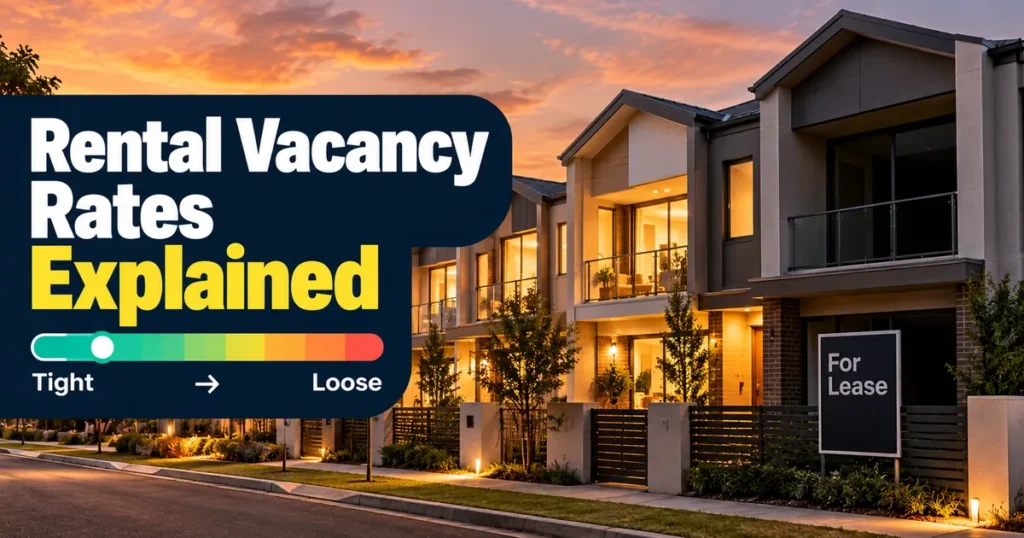
A rental vacancy rate is the share of rental properties in an area that are empty and available to lease. Low vacancy means tenants are competing for homes, rents tend to rise and your property is less likely to sit empty. It is one of the most useful numbers to check alongside yield.
Key takeaways
- Under 2% is generally considered tight. Around 3% is often treated as balanced.
- As at the September quarter 2026, Cotality measured Adelaide as the tightest capital at 1.4%.
- Each vacant week costs about 1.9% of a year’s rent.
- Allow 2 to 3 weeks a year in most markets, more where vacancy is higher.
How tight is the market now?
Rental markets across Australia remain tight. According to Cotality, as reported in September 2026, Adelaide had the tightest capital city vacancy rate at 1.4%, followed by Melbourne and Canberra at 1.8%, Darwin at 1.9% and Perth at 2.2%.
What vacancy rates tell you
| Vacancy rate | What it usually means |
|---|---|
| Under 1.5% | Very tight. Strong rent growth, quick leasing. |
| 1.5% to 2.5% | Tight. Landlords have the upper hand. |
| 2.5% to 3.5% | Roughly balanced. |
| Over 3.5% | Loose. Expect longer vacancies and pressure on rents. |
These are rules of thumb. Small suburbs can swing sharply from month to month, so look at the trend over a year.
How vacancy affects your yield
Vacancy is income you do not receive. On a $600 a week property, each empty week costs $600, or about 1.9% of the year’s rent. Two weeks takes about 0.18 points off the net yield of a $650,000 property. A tenant change can also bring a letting fee and advertising costs. See property management fees.
Gross yield ignores vacancy entirely, which is one reason to judge properties on net yield.
How much vacancy to allow
- Tight city markets: 2 weeks a year
- Balanced markets or older properties: 3 to 4 weeks
- Regional, mining or tourist towns: more, depending on the local economy. See mining town rental yields.
- Rooming houses and short stays: model occupancy rather than weeks. Use the rooming house or short-term rental calculators.
How to reduce vacancy
Price the rent correctly, time lease expiries away from slow periods, keep the property well maintained, and respond quickly to tenants. More ideas in how to increase rental yield.
Model your vacancy allowance
Change the vacancy weeks and watch net yield and cash flow move.
Frequently asked questions
What is a good rental vacancy rate for investors?
Below about 2% is considered tight and favourable to landlords. Around 3% is often treated as balanced.
How is the rental vacancy rate calculated?
Data providers estimate the share of rental properties that are empty and available, usually from listings data over a set period.
How many weeks of vacancy should I allow?
Two to three weeks a year is a common starting point in tight markets. Allow more in areas with higher vacancy.
See what this property would yield
Enter the price, rent and costs to get gross yield, net yield and weekly cash flow.
General information only. This calculator and content do not consider your personal circumstances and are not financial, tax or legal advice. Speak to a licensed professional before making investment decisions.